From series American Power, 2005-8.
Showing posts with label consumer relations. Show all posts
Wednesday, 26 October 2011
Quiznos Guy dialogue in Easy A
Takashi Homma
Makuhari Bay Town 4, 1995.
Takashi Homma photographs newly built suburban housing in Japan and the highly strategised landscaping around it. Particularly looking at the houses at the edge of the developments. Looks at dehumanising impact and the politics of housing developments, and the industrial use of land.
Tuesday, 25 October 2011
Miriam Backstrom
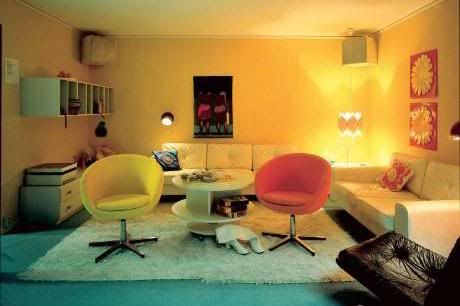
Miriam Backstrom, Museums, Collections and Reconstructions, IKEA Corporate Museum, 'IKEA throughout the Ages'. Almhult, Sweden, 1999, 1999.
'A space that we may ordinarily consider to be defined by an individual's tastes and activities is shown as being prescribed. Our display of personal identity in our homes is not only commercially reproducible but also easily mimicked.' - Charlotte Cotton.
This comment is easily comparable to Sanja Ivekovic's Double Life series. The realisation that you taste and day to day decisions (here personal interior environments, in Sanja's case mannerisms and behaviour) are so easily predictable and are a product of society rather than your own individuality.
Saturday, 3 September 2011
Jack Strange
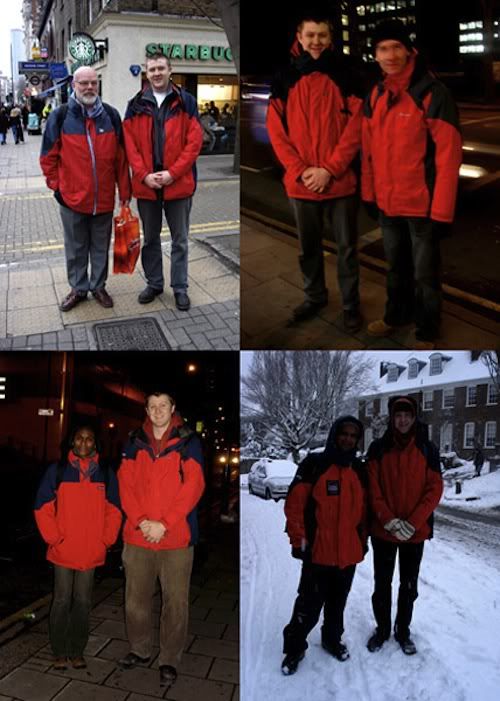
‘Stunt Doubles’, 2007-ongoing, Digital Images Transferred onto Slides
Ongoing project where artist takes a photo of himself with any other stranger that he encounters who is wearing the same coat.
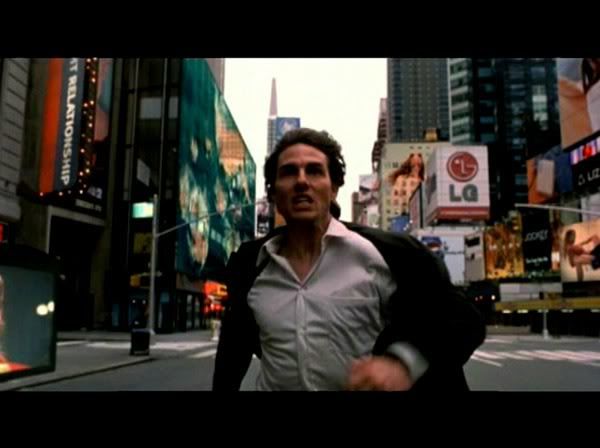
‘Tom’, 2007, DVD, 22 min
Montage of clips from movies of Tom Cruise running.
Jack Strange on Hollywood: Hollywood affects our sense of reality so strongly. It's like a mirror feeding back to us a reflection of ourselves. But it's a very superficial reflection. It's like a closed feedback loop constantly reaffirming and conditioning us with what we believe to be the ideas we want. There is no space to question, think or feel things. Generally, it's just like advertising.
Saturday, 23 July 2011
Sanja Ivekovic
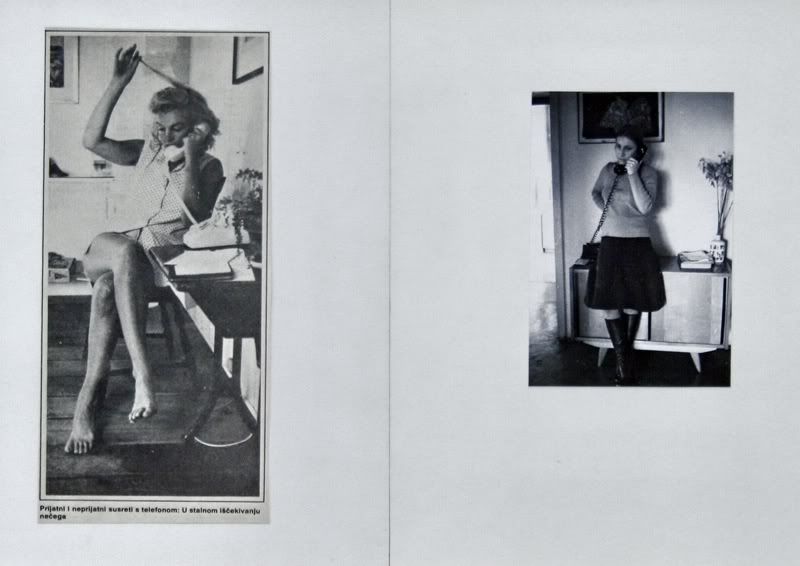
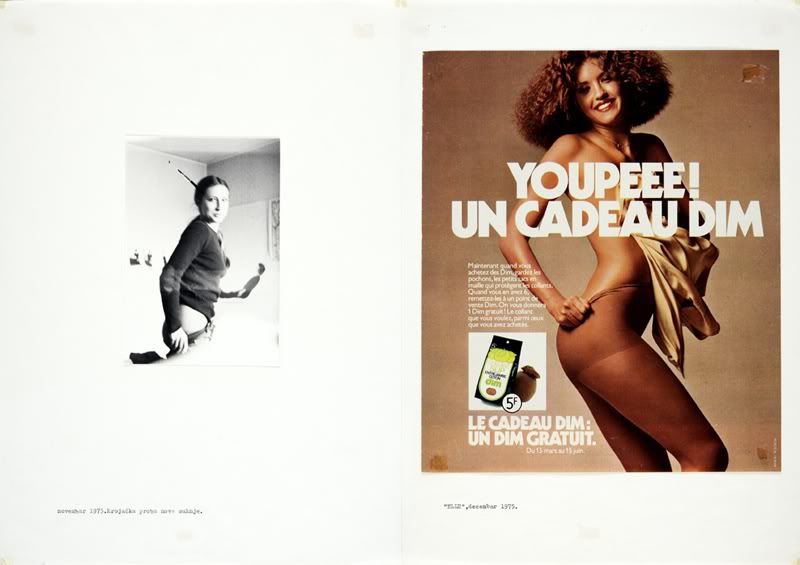
Double-Life, 1975-6
Extracts from Lotty Sanna's 2011 Dissertation-
Pretty Vacant: Narcissism and Feminist Activism in Sanja Iveković's work of the 1970s
Sanja Iveković (Zagreb, 1949) is a female artist whose career began in former Yugoslavia in the 1970s and whose oeuvre of work consists of collage, photography, video, drawings, public action and installation. Iveković’s most powerful works address the issue of the representation of women in the ‘public’ sphere and the way that this affects a woman’s behaviour in her ‘private’ life.
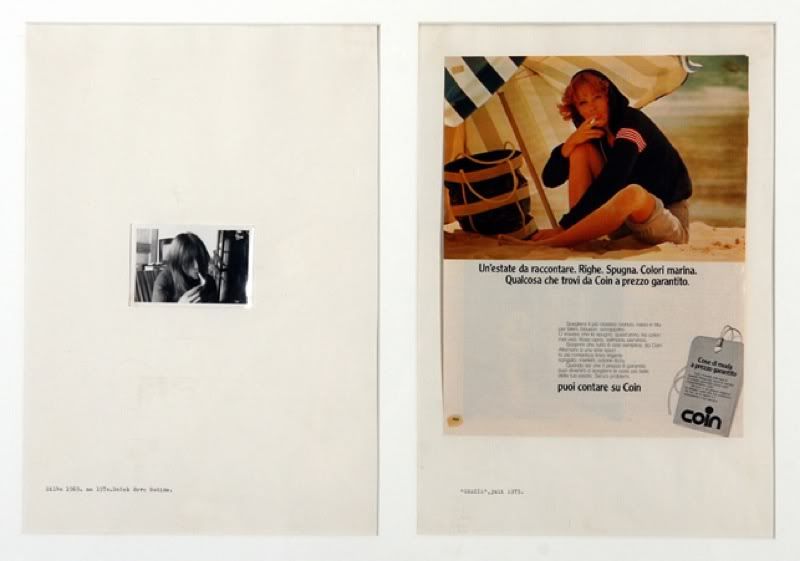
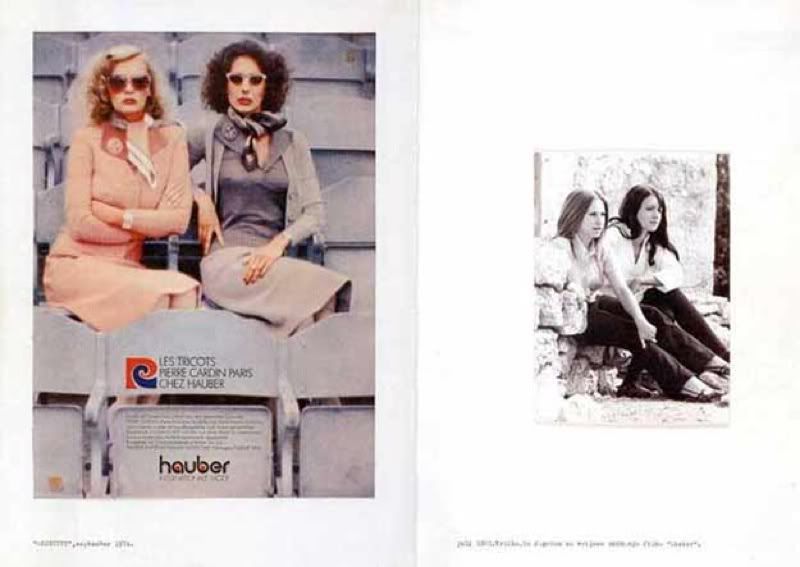
In 1975-76, as a reaction to the imagery promoted by mass media that had begun to invade the whole visual world of Iveković’s society, she created three series, A Double Life, 1975, Tragedy of a Venus, 1975, and A Sweet Life, 1975-6.In Double Life Iveković creates sixty four juxtaposed image comparisons using advertisements containing a picture of a woman next to photographs of herself, taken from her private collection (1953-75), in which her look and pose resemble that of the other woman.For Sweet Life, an image from a celebrity scandal magazine is compared to a private photograph of Iveković.In Tragedy of a Venus an image of Iveković is compared to an image of Marilyn Monroe taken from a magazine published after her death. Each series flows into the next, lending themselves to being viewed as a whole series.Viewed together they provide a visualisation of the artist’s progressive realisation of her lack of originality and agency, as her life mimics so closely the images that surround her.
Tuesday, 12 July 2011
Me and my Personal Trainer; found images
Tuesday, 26 April 2011
Yann Arthurs-Bertrand
Monday, 11 April 2011
Gas Station Covers on their own
Friday, 8 April 2011
Seed Display Reappropriated
Thursday, 7 April 2011
HAnging Garden Display/Banana Stand
Wednesday, 6 April 2011
Golden Gate Bridge Suicide Barrier


The Golden Gate Bridge is the most popular place to commit suicide in the entire world. The deck is approximately 245 feet above the water. After a fall of approximately four seconds, jumpers hit the water at some 76 miles per hour. At such a speed water has been determined to take on properties similar to concrete.Because of this, most jumpers die on their immediate contact with the water. The few who survive the initial impact generally drown or die ofhypothermia in the cold water.
Wednesday, 30 March 2011
Subscribe to:
Posts (Atom)